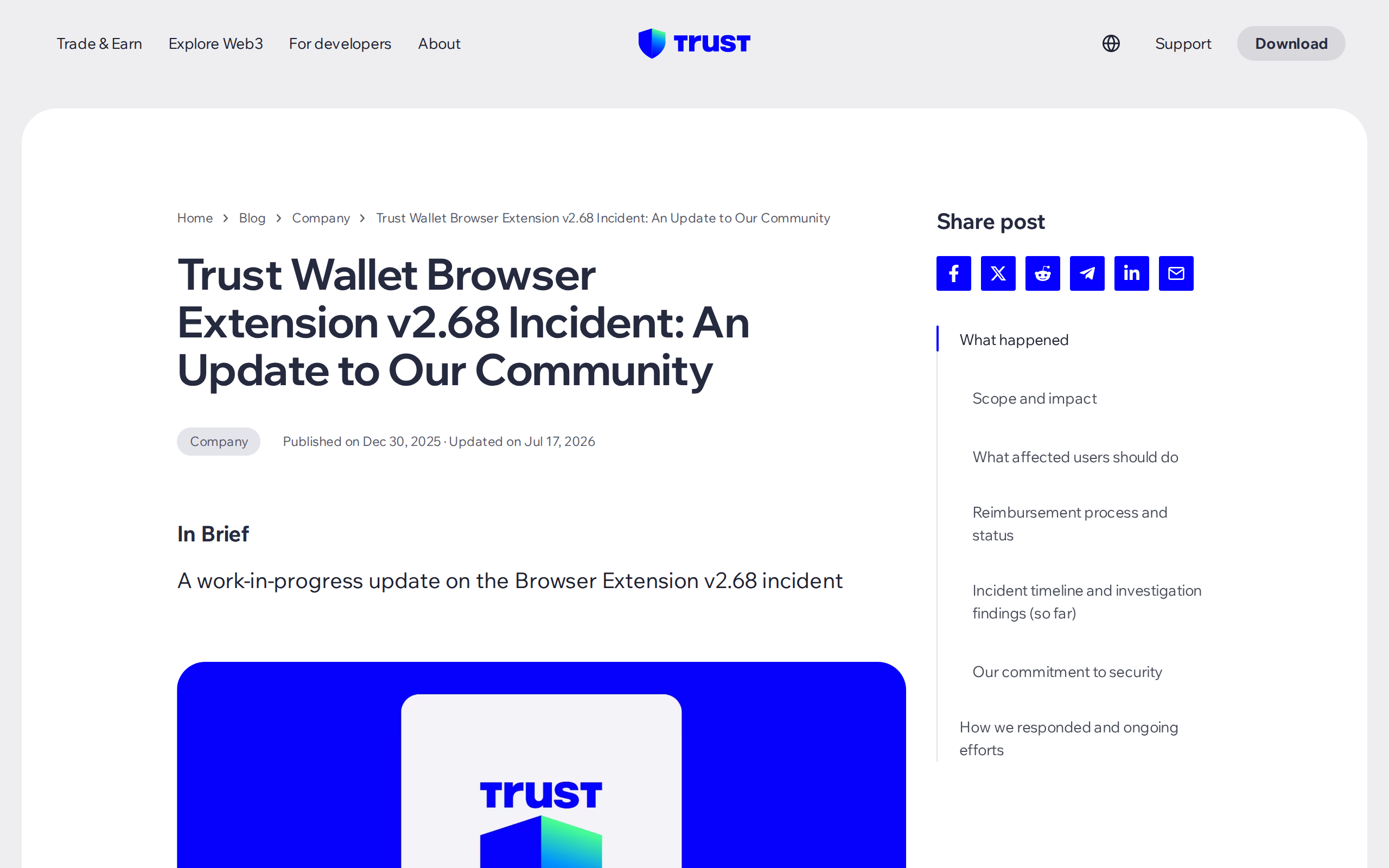
Trust Wallet review: safe after the extension breach?
We tested the mobile app and the browser extension behind Trust Wallet, checked its multi-chain self-custody model against the December 2025 Chrome extension incident that drained user seed phrases, and asked what actually changed.
Our verdict
Trust Wallet's mobile app remains what it has always been: a genuinely broad self-custody wallet across more than 100 chains, with private keys held on the device and a Security Scanner that checks transactions before you sign. The Chrome extension is a different story. A malicious update to version 2.68 in December 2025 transmitted seed phrases to an attacker's server and drained 2,520 wallets for roughly $8.5 million before Trust Wallet caught it, pushed a fix, and began reimbursing victims. Mobile-only users were never exposed. Anyone running the browser extension should treat it as the higher-risk half of this product and keep it current.
Best for: Multi-chain mobile users who skip the browser extension or keep it updated without exception
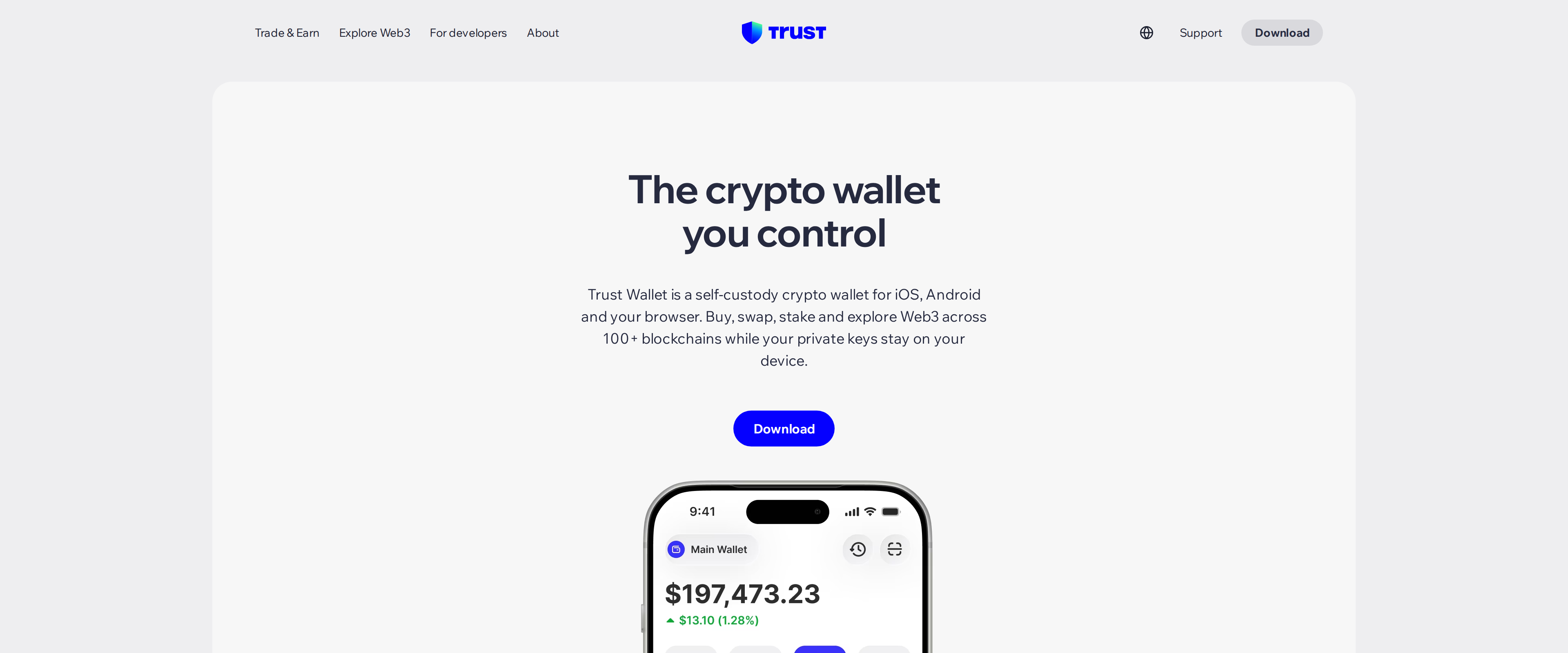
Trust Wallet is the wallet most people already have installed without thinking much about it: over 100 chains, a free download, and private keys that never leave the phone. We used it across several chains for weeks, then went back through exactly what happened when its Chrome extension got compromised in December 2025, because a wallet this widely installed is only as safe as its weakest surface.
What the app itself gets right
Moving assets between Bitcoin, Ethereum, Solana and BNB Smart Chain from one interface, without juggling separate wallets per network, is still Trust Wallet's core pitch, and it works the way it claims to. Swaps, staking, an NFT view and a built-in dApp browser all sit inside the same app, and none of it requires handing custody to Trust Wallet itself: the keys are generated and held on the device.
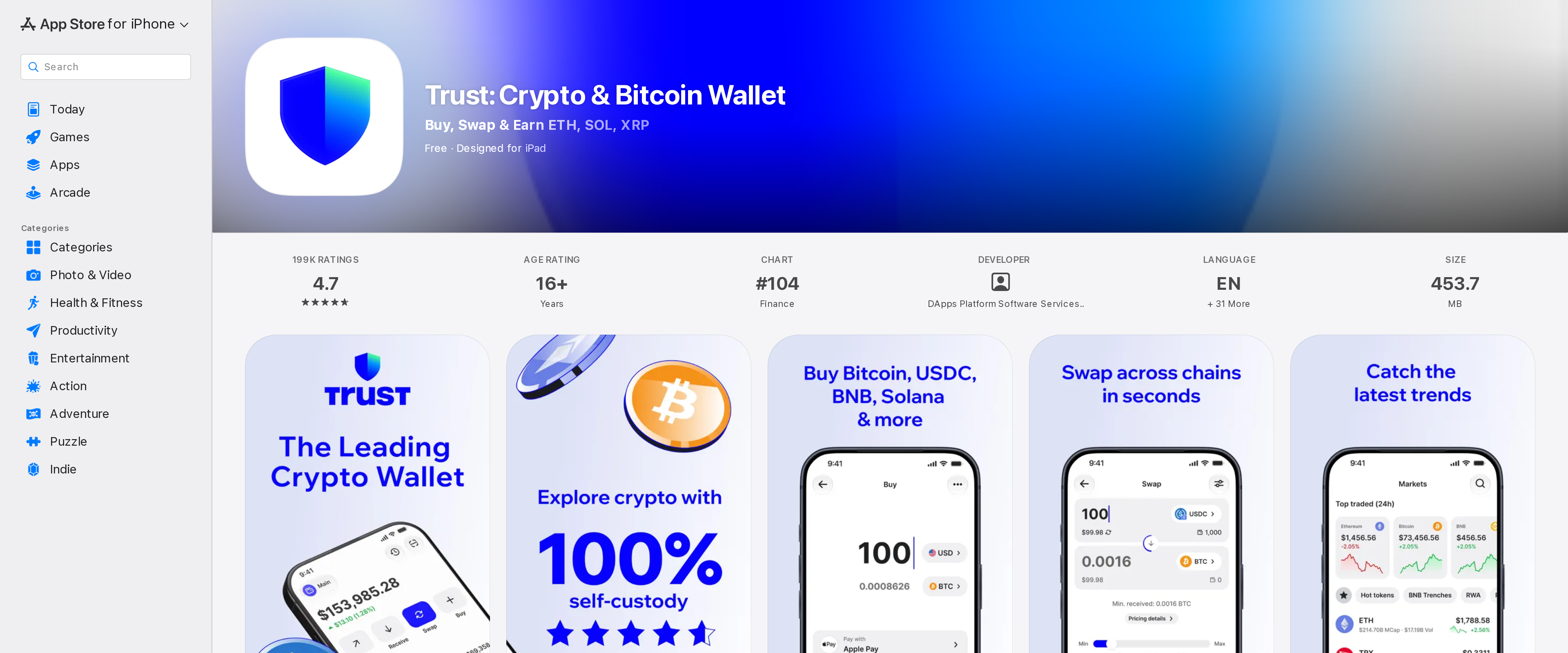
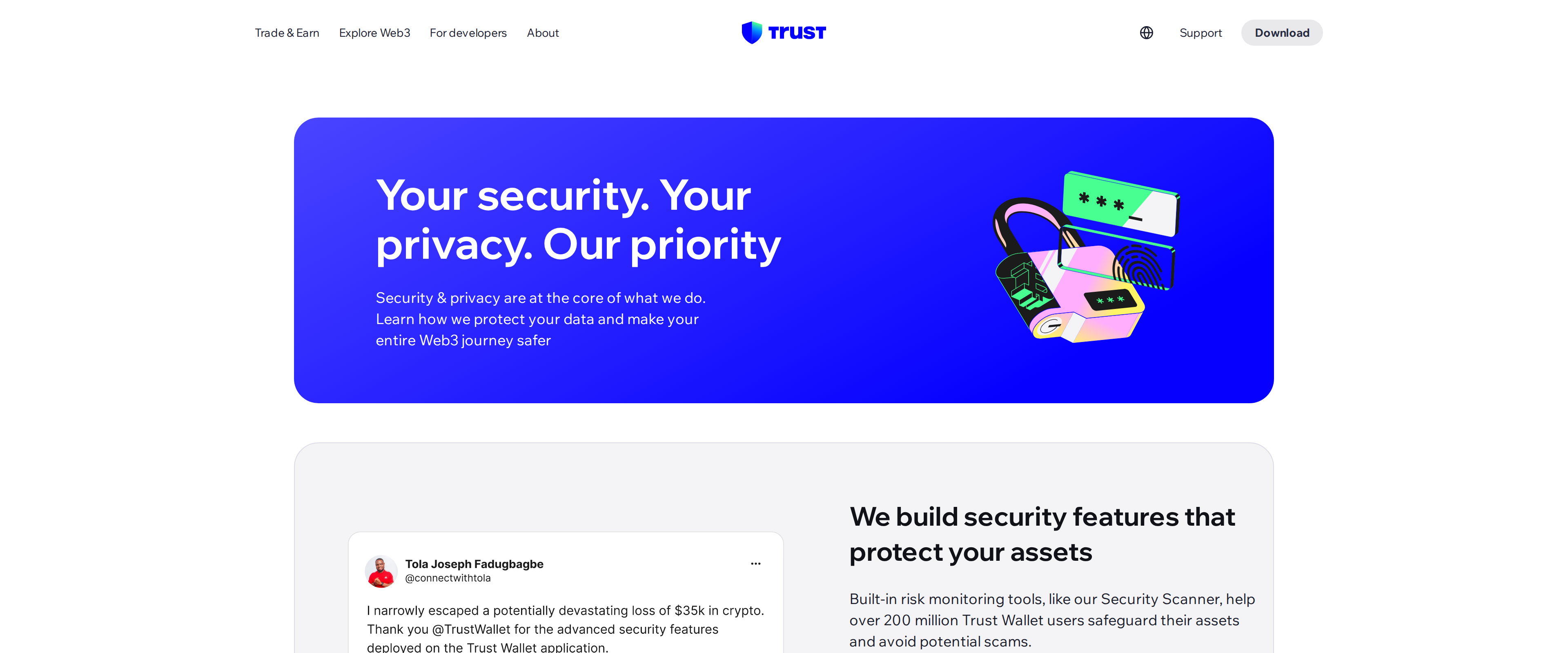
That mobile install base is large, reflected in a 4.7 out of 5 rating on the Apple App Store and 4.6 out of 5 on Google Play. A Security Scanner sits in front of transactions and dApp connections, checking a contract or destination against known risk signals before you sign, which the company says now covers over 200 million users across the app. We found it caught a flagged token contract during testing without slowing down an ordinary swap.
Onboarding is quick enough that a first-time user can be holding assets within minutes: install, generate or import a wallet, and the app defaults straight into its swap and staking screens rather than burying them behind a settings menu. Fiat on-ramps route through third-party providers rather than Trust Wallet itself processing card payments, which keeps the app's own custody surface small but means pricing and available payment methods vary by which partner handles a given country.