Coinbase Wallet Review: Life After the Base App Name
We traded across chains in Coinbase's self-custody app after it dropped the Base App name in September 2026, checked the swap fees and the network list, and weighed self-custody against the convenience the old exchange app never gave up.
7.2out of 107.2
Our verdict
Coinbase Wallet is a genuine self-custody option that has quietly become one of the more capable multi-chain trading apps, now that it has stopped trying to be a social network. The up to 1% swap fee and total absence of custodial insurance are the real trade-offs for holding your own keys, and losing the 12-word phrase means losing the funds, no support ticket fixes that. Anyone who already wants to hold their own crypto across Base, Solana, Ethereum and the rest in one app has a solid option; anyone who wants Coinbase to be able to reverse a mistake should stay on the exchange app instead.
Best for: Self-custody users who want to trade across more than 10 chains from one wallet
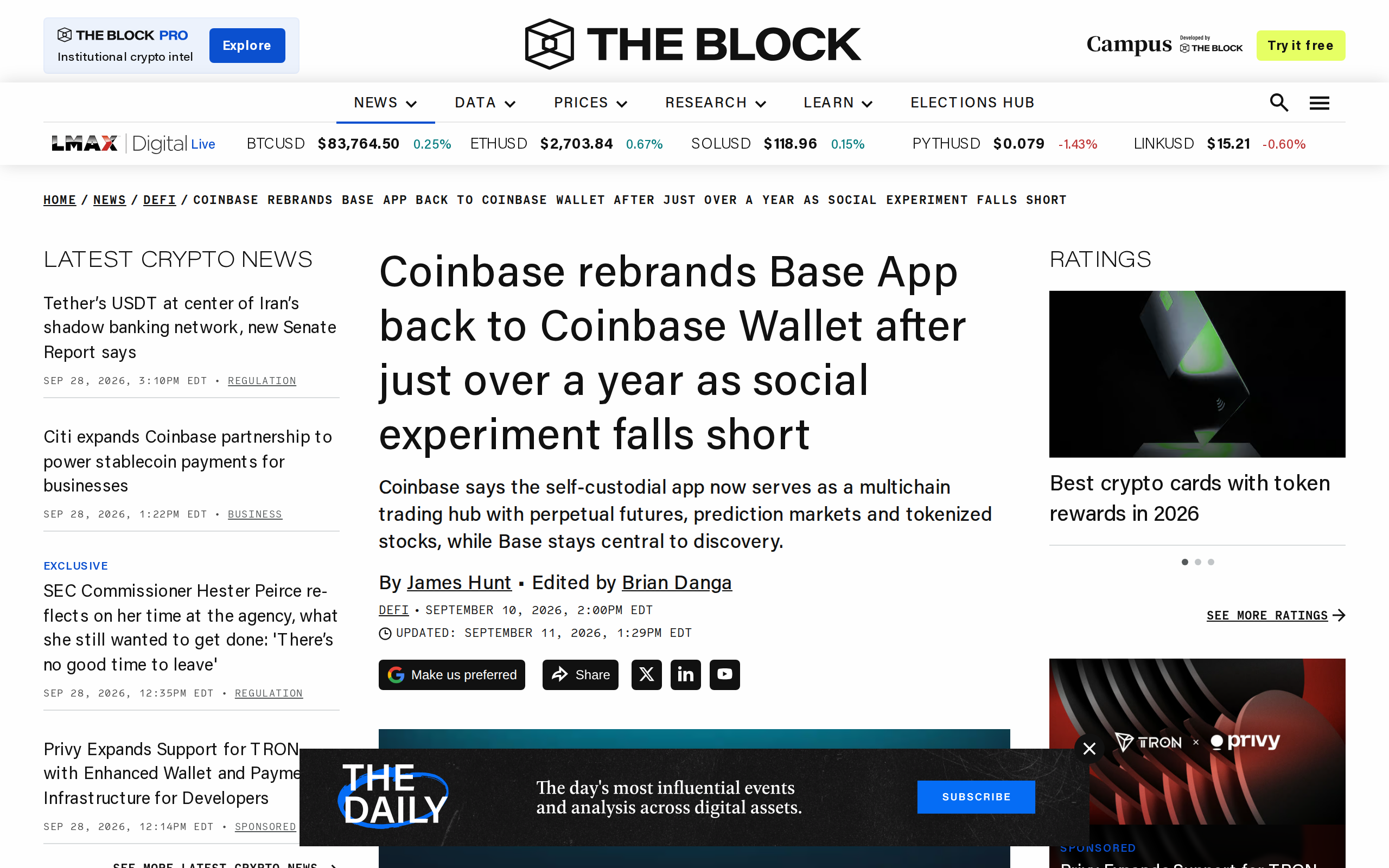
In September 2026 Coinbase quietly admitted a mistake. Fourteen months after renaming its self-custody app the Base App and betting on a social feed of tokens and creators, the company reverted the name to Coinbase Wallet and rebuilt the pitch around trading. We had accounts on both versions and moved our testing to the current app to see what actually survived the reversal.
Why the name came back
Base creator Jesse Pollak said the social and creator features "had fallen short," and CEO Brian Armstrong put it more bluntly: the social bet "didn't quite work." Ryan Kass, who runs the Wallet product, framed the new name as a better description of what the app actually is now, Coinbase's self-custodial front door into what the company calls its everything exchange. We think that framing is honest. A wallet app trying to be a Farcaster-style feed never had a clear reason to exist next to Farcaster itself.
What eleven-plus chains actually buys you
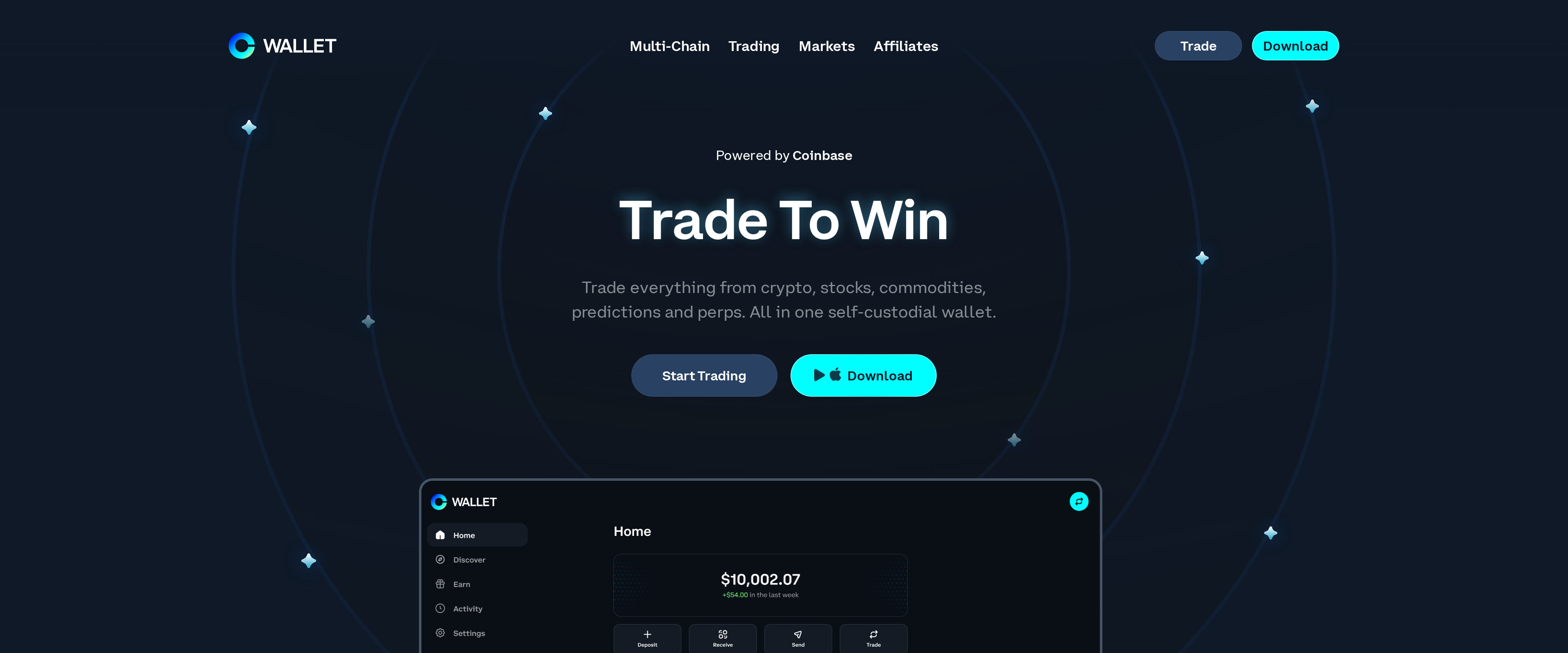
The rebuilt app supports Base, Solana, Bitcoin, Ethereum, BNB Chain, Monad, Optimism, Arbitrum, Polygon, Avalanche and the newly added Robinhood Chain, all from a single seed phrase. We swapped a small Solana balance into a Base-native token without switching apps or manually adding a network, something that would have needed at least a network switch and often a bridge on most wallets a year ago. The app's own homepage now leads with "Trade To Win" and a line about covering crypto, stocks, commodities, predictions and perps in one self-custodial wallet, a pitch that has almost nothing left in common with the social feed the Base App shipped in mid-2025.
Perpetual futures, powered by Hyperliquid, prediction markets and tokenized stocks now live in the same interface. None of that changes the core mechanics of the wallet, it is still a self-custody app sending on-chain transactions, but it means a user rarely needs to leave for another app to chase a specific product.
The fee that comes with convenience
Sends and dApp interactions only cost the network's own gas, no Coinbase markup on top. Swaps are different: the built-in DEX aggregator charges up to 1%, stacked on whatever gas the chain itself demands. We ran a 300 dollar swap on Base and paid roughly three dollars in wallet fee alongside a small gas cost, close to what a centralized exchange's spread would have cost for the same trade, minus the exchange account.
Solana swaps were switched off entirely during our testing window while Coinbase works through a security upgrade, with no published date for when they return. Anyone planning to actively trade Solana tokens inside the app should check the current status before assuming the feature works. Bitcoin swaps sit outside the DEX aggregator entirely and are not offered at all inside the wallet, so a holder wanting to convert BTC to another asset still has to move it to an exchange or a separate service first, a gap that stood out given how much of the marketing leans on multi-chain breadth.
Self-custody means no safety net
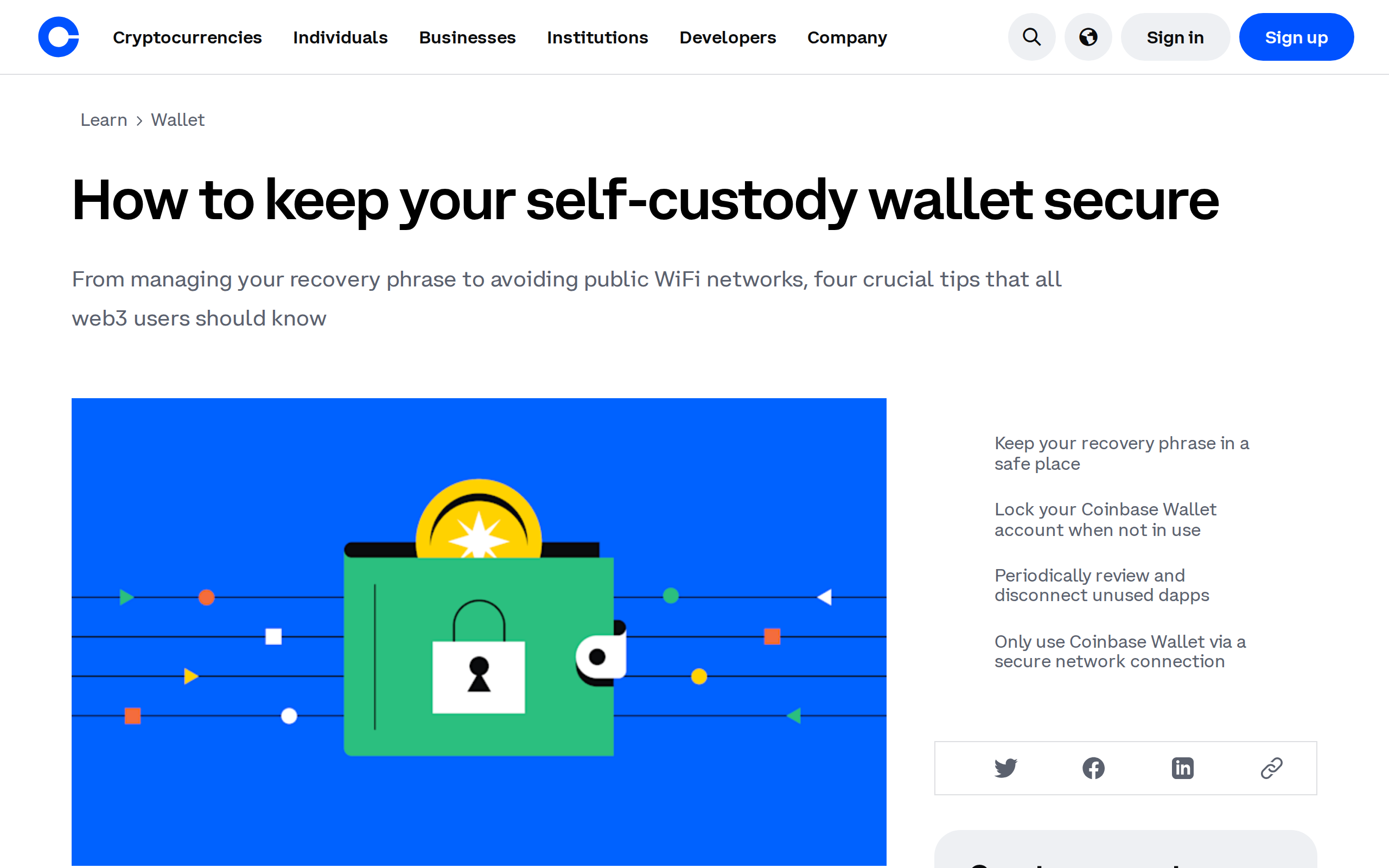
Coinbase's own security guidance is direct about what self-custody costs: keep the 12-word recovery phrase somewhere safe, because losing it means losing the funds permanently, and Coinbase cannot reset it the way it can reset a password on the exchange side.
Coinbase's own security guidance page for self-custody wallet users
There is no custodial insurance behind a self-custody wallet, unlike funds held on the Coinbase exchange, which is the trade every self-custody product makes and one worth stating plainly rather than burying in a support article. If a support team being able to help you is worth more than holding your own keys, this product is the wrong fit regardless of how many chains it supports.
Wallet or exchange: Coinbase still makes you choose
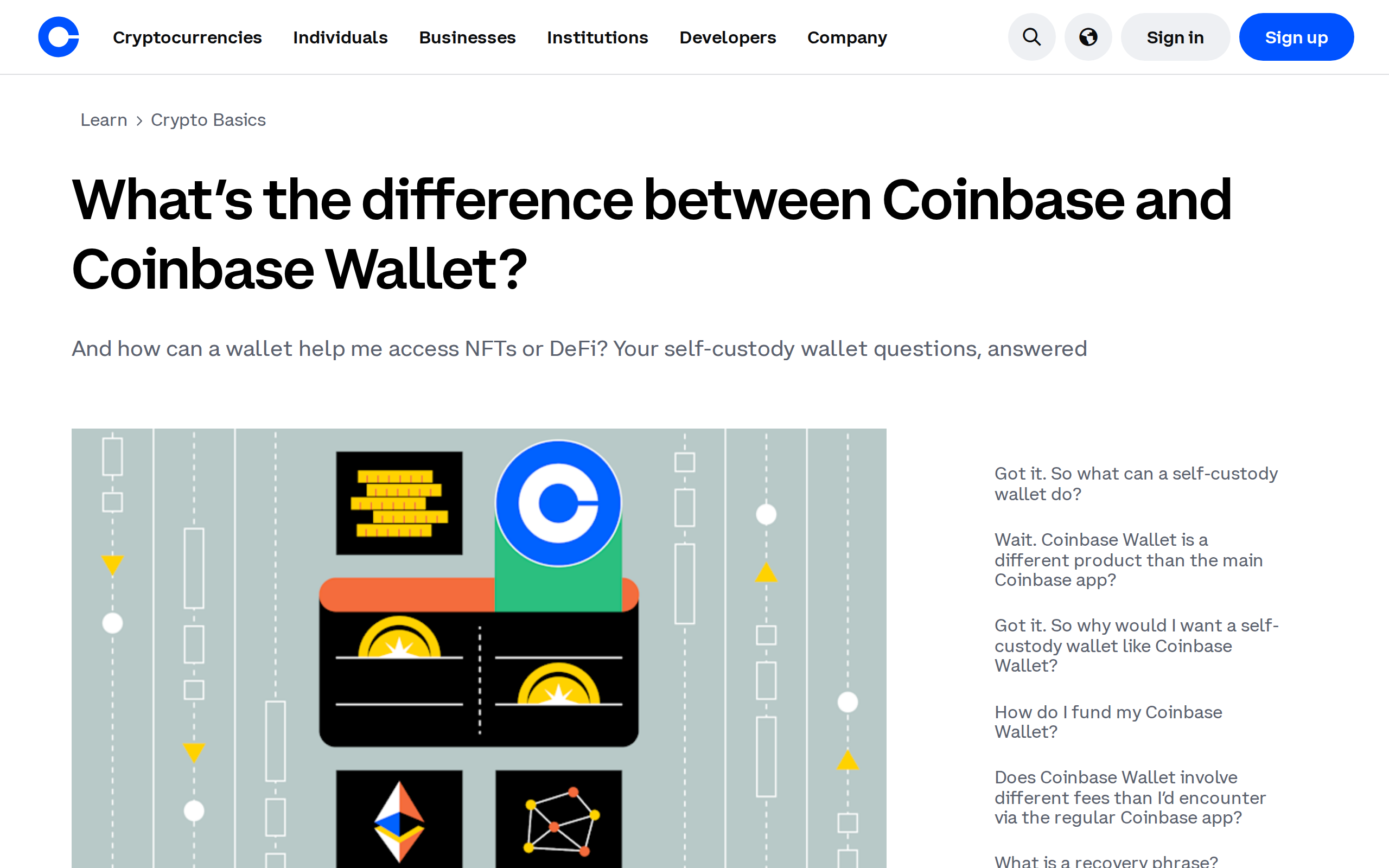
Coinbase's own explainer spells out the split we kept running into during testing: the main Coinbase app is a custodial exchange account, and Coinbase Wallet is a separate, self-custodial product with its own login and its own risks.
Coinbase's help center page distinguishing the exchange app from the self-custody wallet
That separation is clearer now than during the Base App period, when the social branding blurred what the app was actually for.
News coverage of the September 2026 rebrand back to Coinbase Wallet
Our verdict
Coinbase Wallet in its current form earns its place among self-custody options: broad chain support, a real perpetuals and prediction-market layer, and fees that are competitive once you account for the convenience. The catch is the one every self-custody wallet carries, no recovery path if the seed phrase is lost, and a swap fee that active traders will notice over time. Anyone who wants Coinbase to be able to bail them out of a mistake belongs on the exchange app; anyone ready to hold their own keys across several chains now has a wallet that does not ask them to also manage a social feed to use it.
What we liked
True self-custody: private keys stay on the user's device, and Coinbase never holds them
Supports 11+ networks including Base, Solana, Bitcoin, Ethereum, BNB Chain, Monad and the new Robinhood Chain
Perpetual futures through Hyperliquid, prediction markets and tokenized stocks now sit in the same app
Only blockchain gas is charged on sends and dApp interactions; no Coinbase account fee to hold the app
What held it back
DEX swaps carry a fee of up to 1%, on top of whatever gas the chain charges
No custodial insurance of any kind; a lost 12-word recovery phrase means permanently lost funds
Solana DEX swaps were disabled for a security upgrade as of our research, with no fixed return date published
The July 2025 Base App rebrand and September 2026 reversal confused users about what the app even does
Specs
Custody model
Self-custodial; user holds the 12-word recovery phrase
Networks supported
11+, including Base, Solana, Ethereum and Robinhood Chain
DEX swap fee
Up to 1%, plus network gas
Send/dApp fee
Network gas only, no added Coinbase fee
Perpetual futures
Powered by Hyperliquid
Custodial insurance
None; self-custody wallets carry no FDIC or crime insurance
Rebrand history
Renamed Base App in July 2025; reverted to Coinbase Wallet in September 2026
Recovery method
12-word seed phrase, unrecoverable by Coinbase if lost