Exodus Review: Is the Polished Design Worth Its Swap Spreads?
Exodus never charges a network fee markup and looks better than any wallet we have tested, but its built-in swap runs through a third-party rate we measured at roughly 2.2 percent on a mid-size trade.
6.9out of 106.9
Our verdict
Exodus is the best-designed self-custody wallet we have opened, and its Trezor and Ledger integration makes it a genuinely usable front end for a hardware wallet rather than a toy for hot-wallet balances. The built-in swap is where the polish stops paying for itself: the spread runs several times what a centralized exchange charges on the same trade, and the app does not surface a transaction hash after a swap completes. Use it to hold and manage keys, and swap somewhere else when the amount is not trivial.
Best for: Users who want a clean wallet paired with a Trezor or Ledger, who swap only small amounts inside the app
Why the interface matters more than usual here
Most self-custody wallets look like a form. Exodus looks like a finished product, and that distinction shapes who should use it. We installed it on desktop and mobile, moved funds between both, connected a hardware wallet, and ran several swaps to see whether the design held up once real money was involved rather than a demo balance. Exodus now describes itself as covering payments and spending as well as storage, with a card and rewards product called Exodus Pay sitting alongside the wallet, so we also checked whether that expansion changed anything about the core wallet experience it built its name on.
What it does not charge you for
Exodus does not add a fee markup to sending or receiving crypto. You pay the network fee only, and the app lets you adjust that fee for speed or cost before confirming. Balances sync across the desktop and mobile apps without a manual export step, and the interface stayed legible even with a dozen assets in the portfolio, which is more than we can say for several competitors that bury smaller balances under a fold. For a wallet whose entire pitch is ease of use, that part delivers.
Where the swap spread hides
The swap feature is Exodus's other headline function, marketed as starting from 0.5%. That number describes the fee Exodus itself takes; it does not describe what you actually pay, because the exchange rate comes from a third-party liquidity provider with its own spread baked in. On a mid-size swap we measured an effective cost close to 2.2%, and independent testing by other reviewers found costs approaching 5% on trades under $100, where illiquid pairs and thin routing dominate the price. On a $1,000 swap that gap between the marketed fee and the real cost runs into tens of dollars, several times what the same trade would cost on a centralized exchange. Exodus does not display the network fee before confirming a swap, and it does not show a transaction hash or link to a block explorer once the swap completes, which makes the actual cost harder to audit after the fact.
The hardware wallet pairing is the strongest feature here
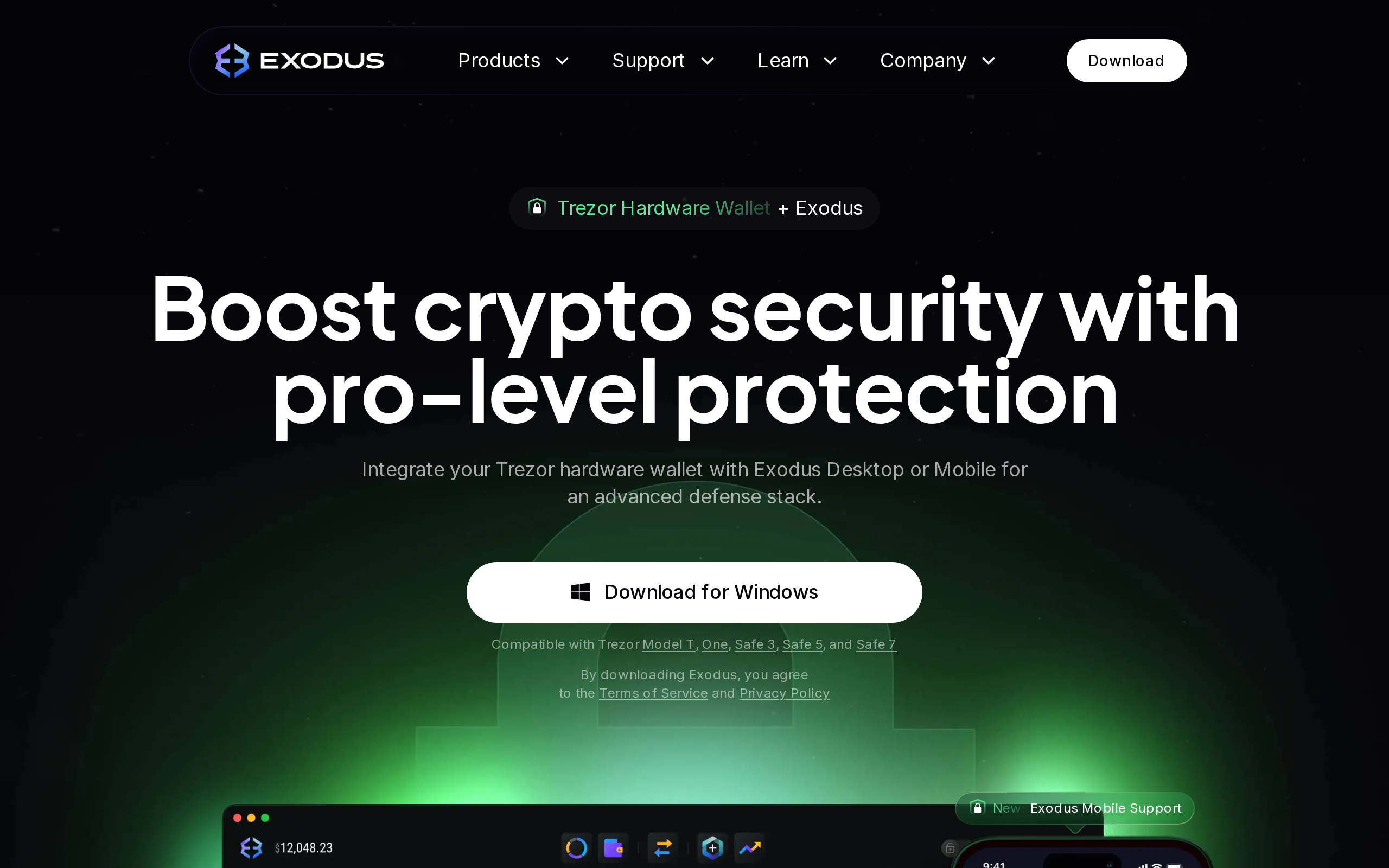
Where Exodus earns its design reputation is as a front end for a hardware wallet. Connect a Trezor Model T, One, Safe 3, Safe 5 or Safe 7, or a Ledger device, and it shows up as its own portfolio inside the app: you can send, receive and swap directly from the hardware wallet without switching software. That combination, cold storage with a usable interface, is the strongest reason to install Exodus at all. The desktop app carries the same design language across Windows, macOS and Linux, and setup with a Trezor took us under five minutes once the device itself was initialized.
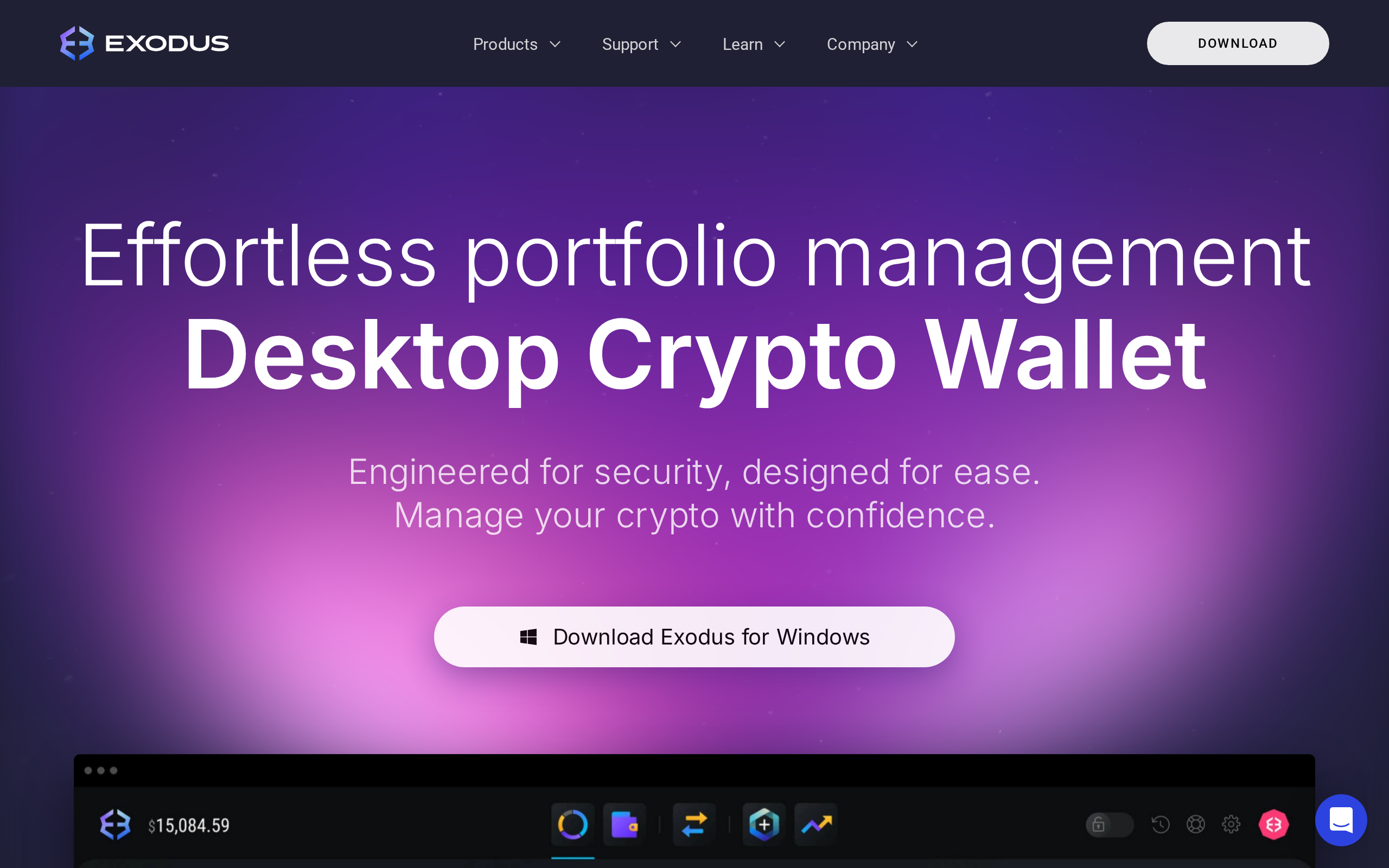
Exodus's desktop app landing page, showing the hero pitch for portfolio management
Security tradeoffs behind the polish
Exodus's core application is closed source, and no third-party firm has published a security audit of it, even though several individual components are open. There is no two-factor authentication and no multi-signature option, and password requirements are lenient by design, favoring accessibility over friction. None of that is unusual for a hot-wallet-style app, but it means Exodus should hold spending balances or amounts you actively trade, not the bulk of a long-term position, and that position belongs on the hardware wallet it pairs with instead.
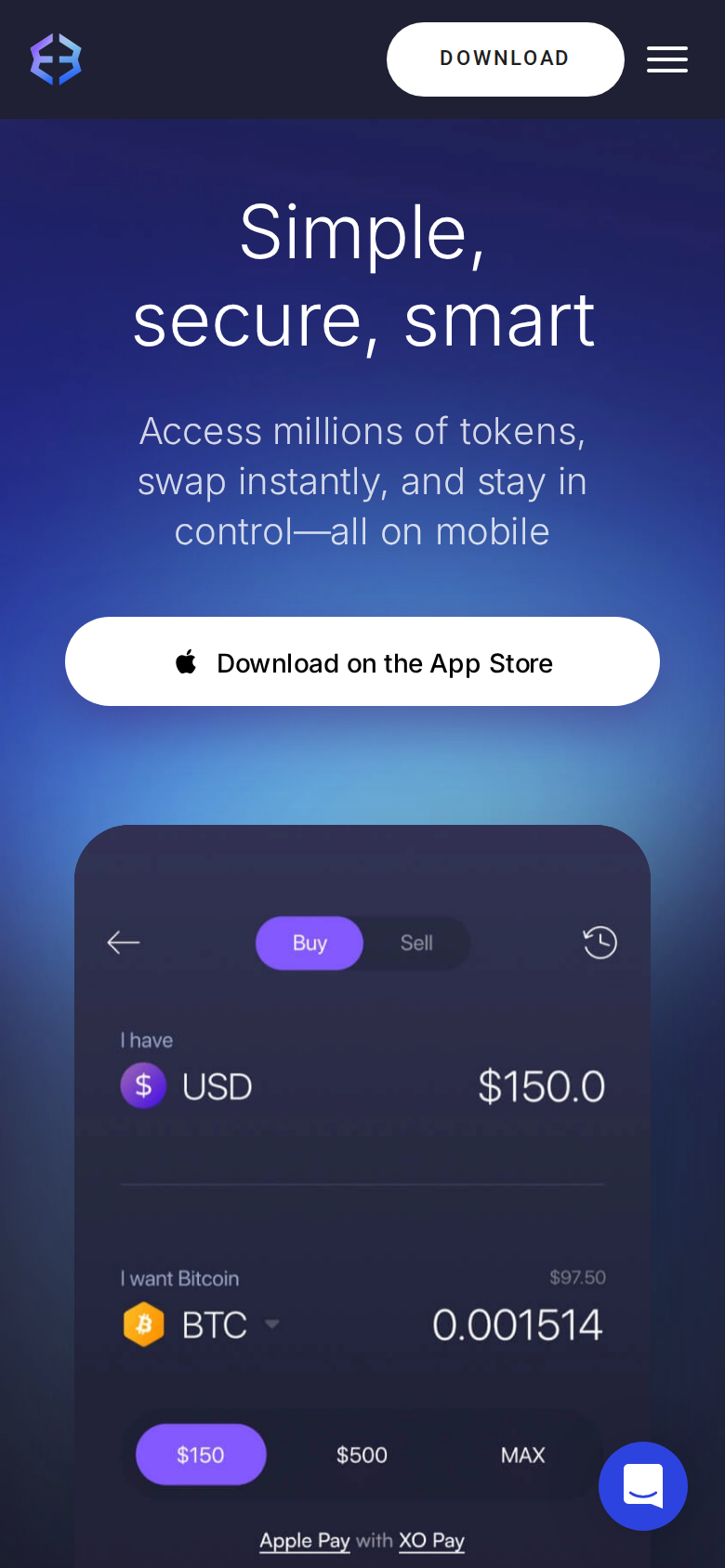
Exodus's mobile app landing page on iOS and Android
A practical routine, not a rule
Our working habit by the end of testing was simple: hold and manage the bulk of a position through the Trezor-paired portfolio, use Exodus's own hot wallet for small, active balances, and route anything above a couple hundred dollars in swap value to a centralized exchange or a dedicated swap aggregator instead of the built-in exchange. That routine kept the parts of Exodus we liked, the interface and the hardware pairing, while sidestepping the part that quietly costs the most.
Verdict
Exodus is a genuinely pleasant wallet to use every day, and its hardware wallet integration is the best reason to install it. The built-in swap is a convenience fee dressed up as a low one, and we would not run anything beyond a small, time-sensitive trade through it. We rate it 6.9: excellent design and hardware pairing pulled down by a swap cost that does not match its marketing.
What we liked
No fee markup on sends or receives beyond the network fee
Clean desktop and mobile interface that syncs across devices
Direct Trezor and Ledger integration for send, receive and swap
Staking built in for supported assets without leaving the app
What held it back
Swap spread measured around 2.2% on a mid-size trade, higher on small amounts
Core application is closed source with no published third-party audit
No 2FA or multi-signature support
No transaction hash or block explorer link shown after a swap