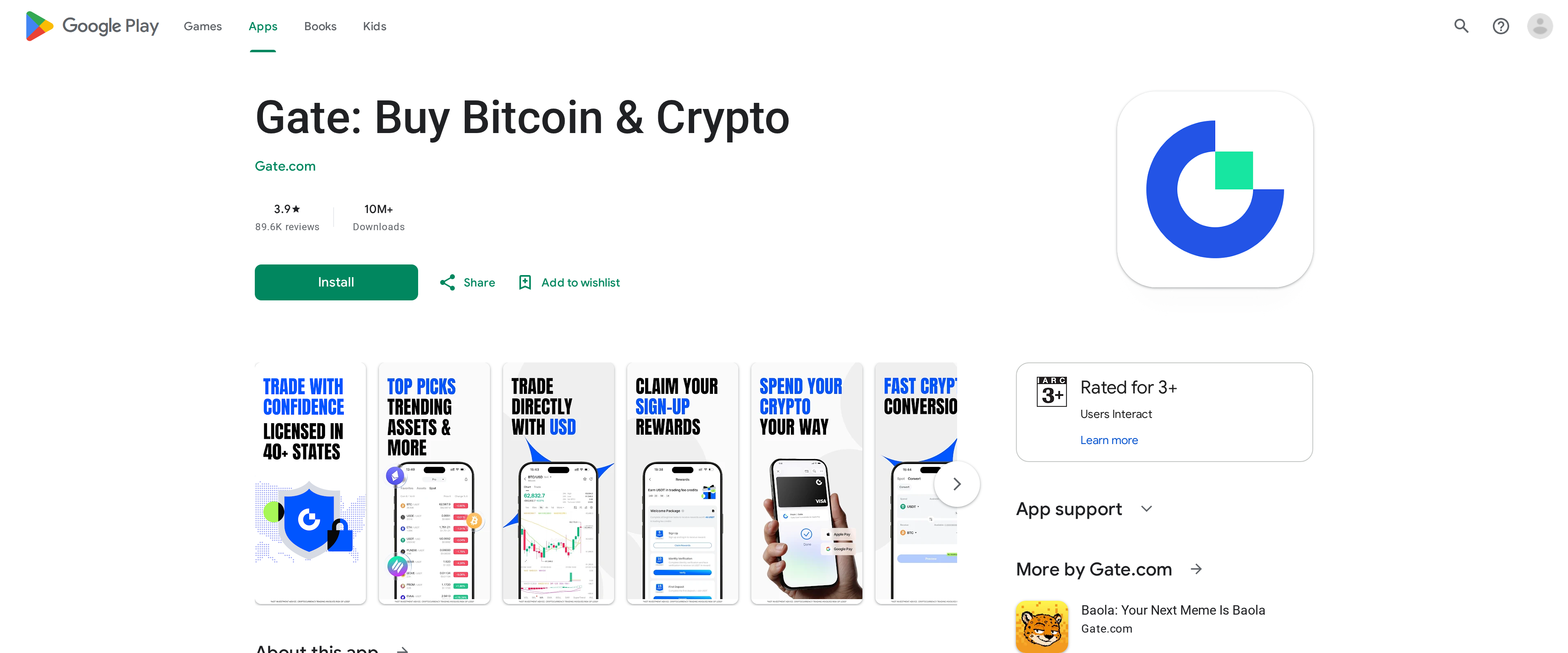
Gate review: does the huge coin catalog come with reserves you can trust?
Gate lists more coins than almost anyone else in crypto and now publishes zk-verified proof of reserves to back it up. We checked those numbers, the licensing and an old, allegedly undisclosed breach against the exchange's pitch to see if a bigger balance is safe there.
Our verdict
Gate's published numbers are genuinely strong: a zk-verified 115 percent reserve ratio, MiCA licensing in Europe, ISO 27001 certification and a $100 million-plus SAFU fund all check out against independent trackers, and the coin catalog is as wide as any major exchange's. What keeps us from calling it fully trustworthy for a large balance is the exchange's own history: an alleged $234 million breach from 2018 that on-chain investigators say Gate never disclosed, plus a steady stream of complaints about frozen accounts and stuck withdrawals. Trade the long tail of altcoins here for the selection, but keep the balance you cannot afford to lose somewhere with a cleaner record.
Best for: Traders after a wide coin catalog who check Gate's reserve dashboard rather than assuming a spotless history
Gate has always sold itself on breadth: more coins than Binance, more pairs than Kraken, a catalog long enough that whatever obscure token you want is probably listed here first. Breadth is easy to advertise and hard to trust with a real balance, so we spent our time checking the reserve numbers and the history behind them rather than counting listings.
The reserve dashboard actually holds up
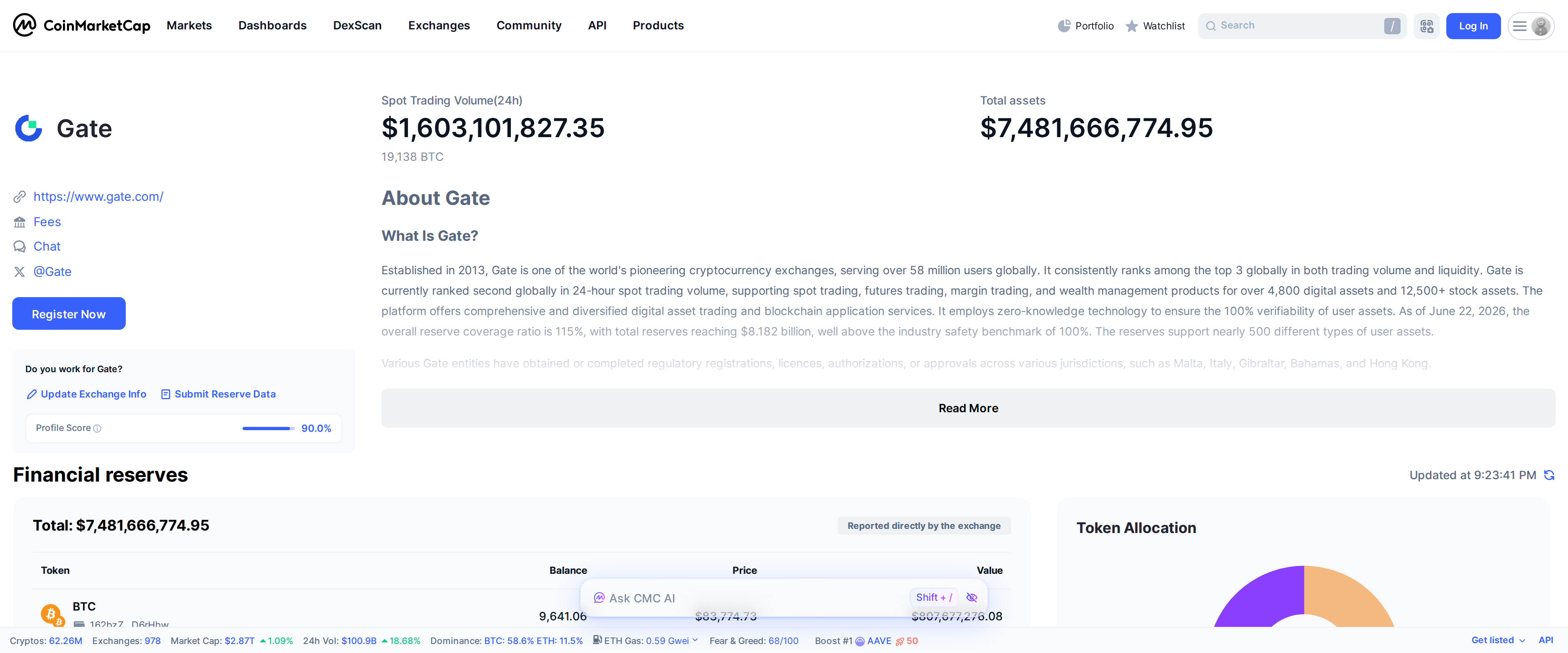
Gate's proof of reserves is not just a marketing line. Its June 2026 report, now built on zero-knowledge verification rather than a simple snapshot, shows a 115 percent coverage ratio against $8.18 billion in total reserves, a number that matches what independent trackers report on the exchange's own listing page, down to the reported spot volume of roughly $1.6 billion and total tracked assets of $7.48 billion at the time we checked.
That figure sits comfortably above the 100 percent solvency line every proof-of-reserves exchange claims to clear, and Gate was one of the first major platforms to publish this kind of report at all, back when most competitors were still resisting the idea. Add ISO 27001 certification, mandatory two-factor authentication, withdrawal whitelists and a SAFU insurance fund valued past $100 million, and the security architecture reads like a genuinely mature operation. None of this is verified by an outside body sitting between Gate and its users, so the reserve number ultimately rests on Gate's own zk-proof pipeline being honest about what it feeds in.
Licensing has caught up with the marketing
A MiCA license now covers Gate's European operations, and the exchange holds registrations across Malta, Italy, Gibraltar, the Bahamas, Hong Kong, Dubai and Australia. Gate US, a separate and more limited entity, handles spot trading for American users in roughly 30 states, though the main global platform remains closed to US residents entirely. Mainland China and Canada are blocked outright, which rules Gate out for a meaningful slice of readers before fees ever enter the conversation.