Bitpanda Review: MiCA-Licensed Convenience, at a Real Spread Cost
Bitpanda holds a full MiCA licence and lets you buy crypto from one euro on Apple Pay in minutes. We funded an account, bought and sold across its standard app and its Fusion exchange to measure the actual spread between the two.
7.6out of 107.6
Our verdict
Bitpanda is the most straightforwardly licensed way for a European to buy crypto: an Austrian FMA licence, BaFin oversight in Germany, and one of the first MiCAR authorisations issued anywhere in the EU. That compliance record has a price. The standard app charges a spread in the 1.49% range on a simple crypto buy, which is high next to a dedicated exchange, while the separate Fusion order book brings that down to as little as 0.02% to 0.25% for anyone willing to place a limit order instead of tapping buy. Casual buyers get an easy, well-regulated app at a real cost; anyone trading often should move straight to Fusion and treat the standard app as onboarding only.
Best for: Europeans who want licensed, easy crypto access and do not trade often enough to justify a lower-spread exchange
Bitpanda sells itself as the boring, licensed option in a market full of exchanges chasing new listings and leverage. That reputation is earned. What it costs to bank on that reputation is the part most sign-up pages skip past.
The licence is not marketing copy
Bitpanda GmbH holds a licence from Austria's FMA, is supervised by Germany's BaFin, and secured a MiCAR authorisation among the first issued anywhere in the EU. That matters more after 1 July 2026 than it did before: exchanges without a MiCA licence lost the right to serve EEA residents on that date, and several large platforms had to exit the region as a result. Bitpanda kept operating through the deadline without disruption, which is the practical payoff of having done the licensing work years in advance rather than scrambling for it.
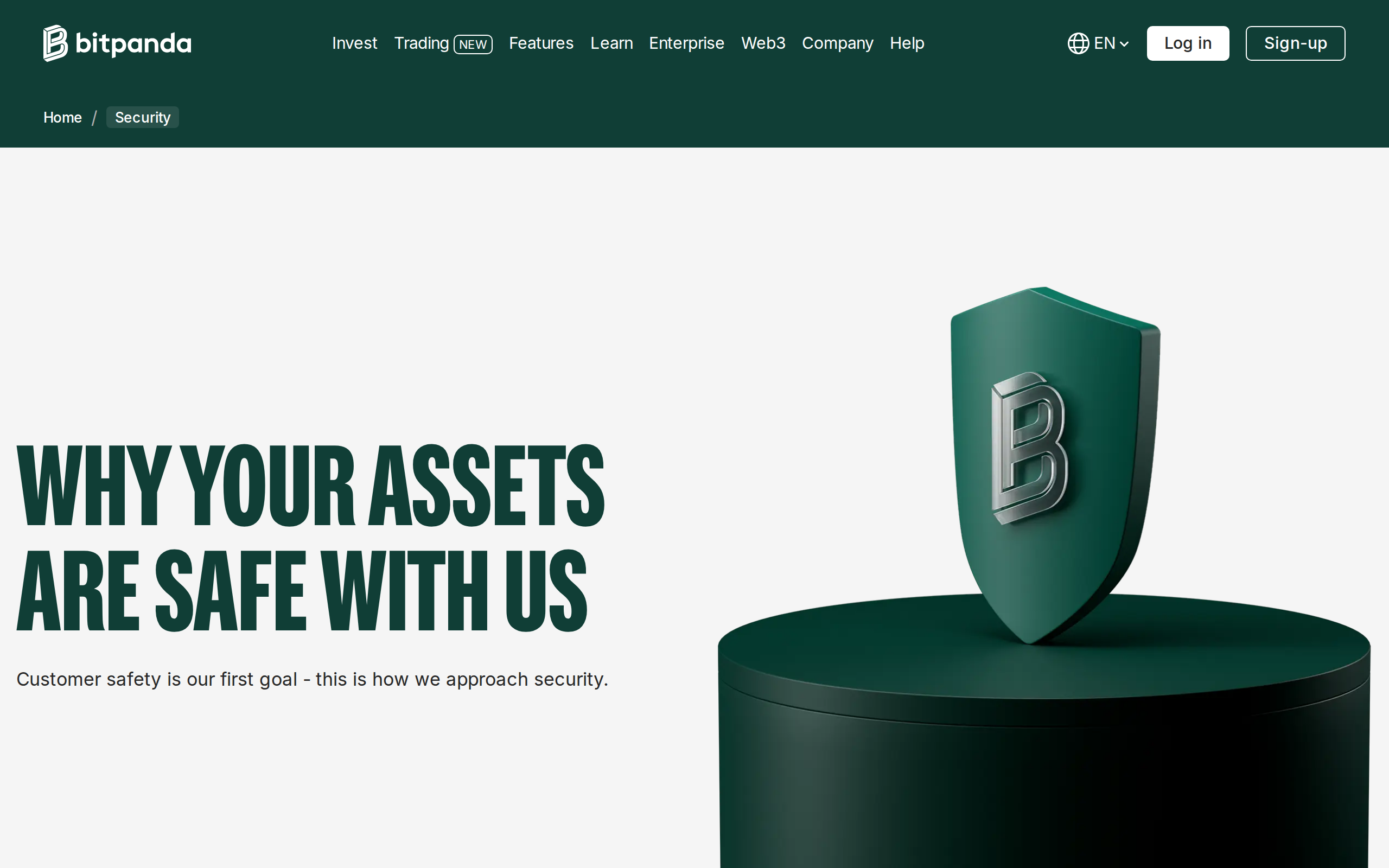
Bitpanda's security page, outlining its custody and asset-protection approach
What a simple buy actually costs
We bought a small amount of Bitcoin through the standard app using a card, the flow most new users land on first. The effective spread worked out close to the 1.49% figure independent trackers report for standard crypto buys, all baked into the quoted price rather than itemised as a separate fee. That is not unusual for a beginner-friendly app, PayPal and Revolut both run similar spreads, but it is a real cost, and it is easy to miss because Bitpanda never shows it as a line item the way a maker/taker fee table would.
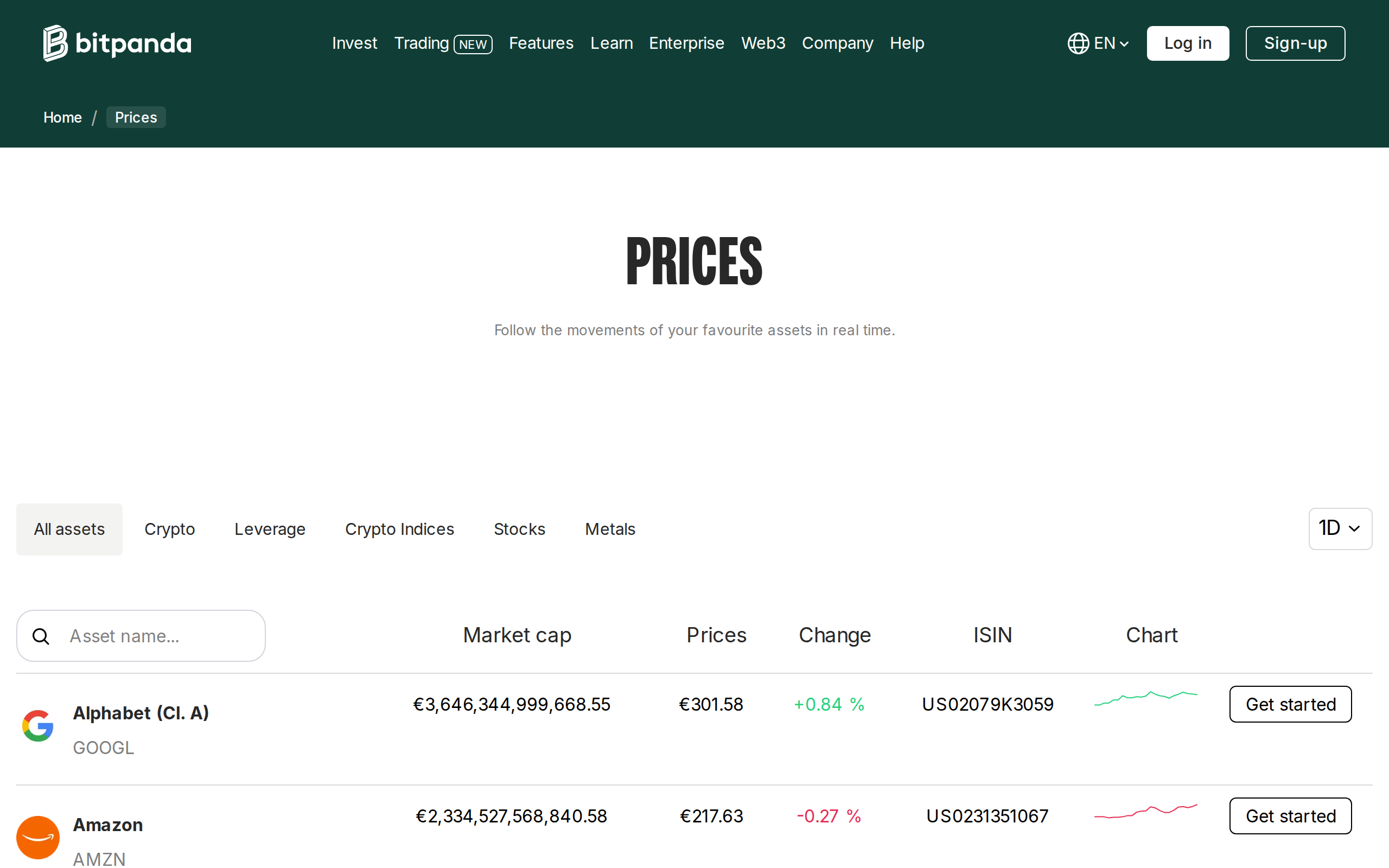
Bitpanda's live Prices page, tracking crypto asset values as they move
Fusion is the same company at a different price
Bitpanda also runs Fusion, a separate order-book exchange with maker and taker fees between 0.02% and 0.25% depending on volume, a fraction of the standard app's spread. We placed a limit order on Fusion for the same trade pair and the total cost came in well under a tenth of what the app-based buy had cost minutes earlier. The catch is that Fusion is not the default experience: new users land in the standard app, and finding Fusion requires knowing to look for it. Anyone trading more than occasionally should make the switch deliberately rather than leaving recurring buys running through the expensive default.
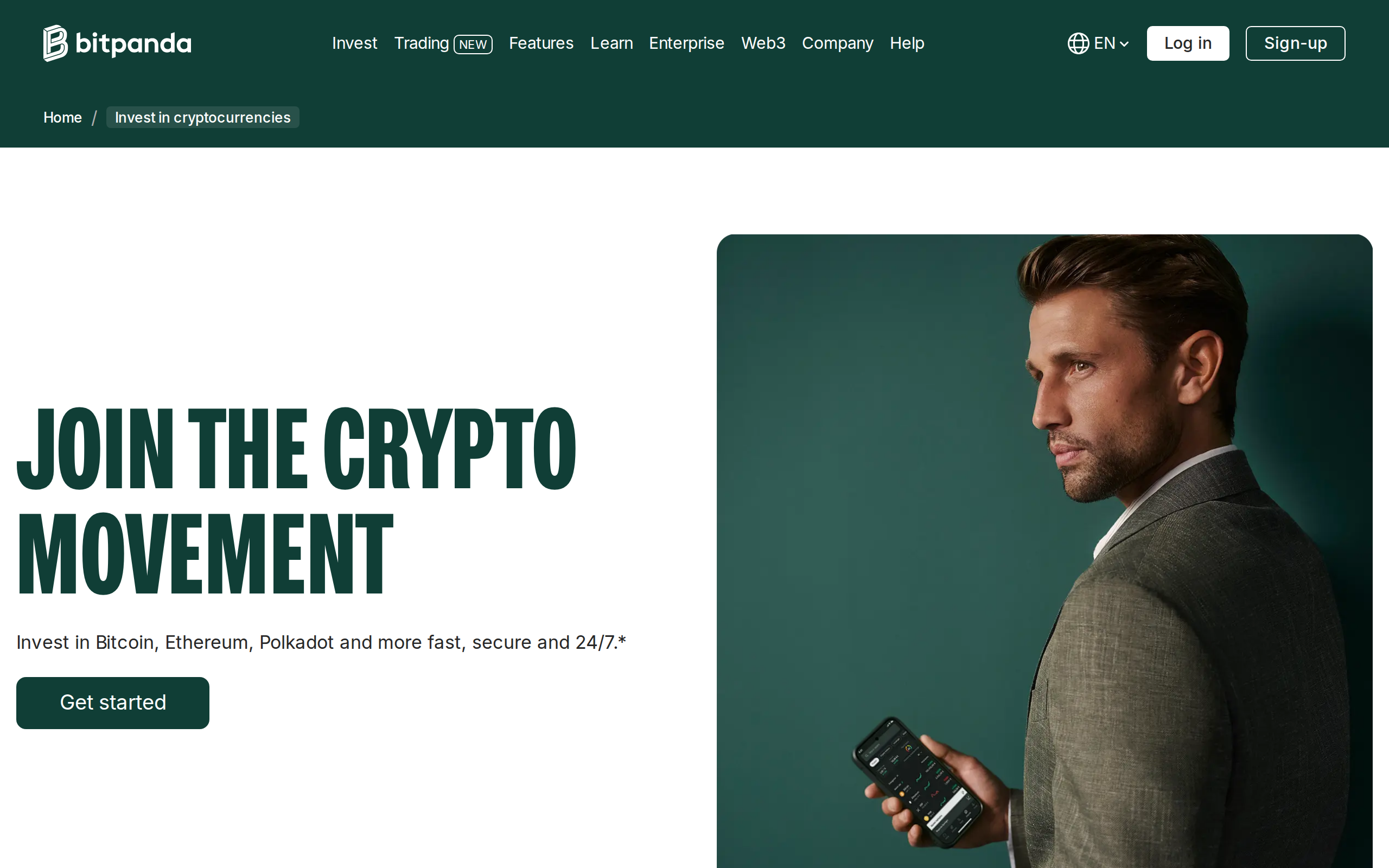
Bitpanda's crypto investing page, the entry point most new users see before finding Fusion
Stocks and metals ride along, at their own price
Beyond crypto, Bitpanda lists over 10,000 stocks, ETFs and metals, each stock or ETF trade carrying a flat 1 euro fee. That is a genuinely low bar for a European wanting one app for both crypto and traditional assets, and the flat fee is easier to reason about than a percentage spread. We did not test the stock side beyond confirming the fee structure matches what the site states, since this review is focused on the crypto product, but the option to consolidate both inside one MiCA-licensed account is a real point in Bitpanda's favor for anyone already choosing between separate brokers.
Metals sit in the same catalogue, bought and sold with the same interface as crypto, which is unusual among crypto-first apps and useful for anyone who wants gold exposure without opening a separate brokerage relationship just for that.
Deposits cost nothing, but Apple Pay is the fastest way in
Bank transfers, cards and Apple Pay all deposit for free, and we found Apple Pay the fastest route from tapping buy to holding an asset, under thirty seconds end to end on our test purchase. A SEPA transfer took closer to a business day to clear, standard for European bank rails rather than anything Bitpanda-specific. Whichever method you choose, the deposit itself carries no fee; the cost sits entirely in the spread once you place the trade.
Who should use it
Choose Bitpanda's standard app if you want a licensed, well-regulated way to buy crypto occasionally and value simplicity over shaving basis points off every trade. Move to Fusion the moment your trading becomes regular, because paying a 1.49% spread on repeat purchases adds up fast against Fusion's near-zero equivalent. If your priority is the lowest possible fee on every single trade and you do not care about the licensing story, a dedicated low-fee exchange will beat Bitpanda's standard app on price alone. For a European who wants to sleep on a regulated platform, Bitpanda earns that trust; just do not let the convenient default cost you more than it needs to.
What we liked
Full MiCAR licence plus FMA and BaFin oversight across the EU
Apple Pay and card purchases from as little as 1 euro
Fusion order book cuts spreads to 0.02% to 0.25% for active traders
Free deposits and withdrawals with no minimum balance
650+ cryptocurrencies alongside stocks, ETFs and metals in one app
What held it back
Standard app spread runs around 1.49% on a simple crypto buy
Two separate interfaces, app and Fusion, split the good and bad pricing apart
Stock and ETF trades carry a flat 1 euro fee on top of spreads