CoinTracker review: the right tax tool if your history sits on Coinbase?
We connected a Coinbase account and a DeFi wallet to CoinTracker, ran the transactions through its paid tiers, and checked its accuracy claims against a CPA's independent walkthrough before scoring it.
Our verdict
CoinTracker earns its status as Coinbase's official tax partner: the OAuth sync pulls a Coinbase account in one click and handles the 2026 Form 1099-DA reconciliation cleanly, which is exactly the case it is built for. Push it into DeFi, cross-chain bridges or NFT trades and accuracy drops to the 80-85 percent range by independent CPA testing, low enough that anyone past a simple buy-and-hold history should budget time for a manual review before filing.
Best for: Investors whose activity sits mostly on Coinbase and a small number of centralized exchanges
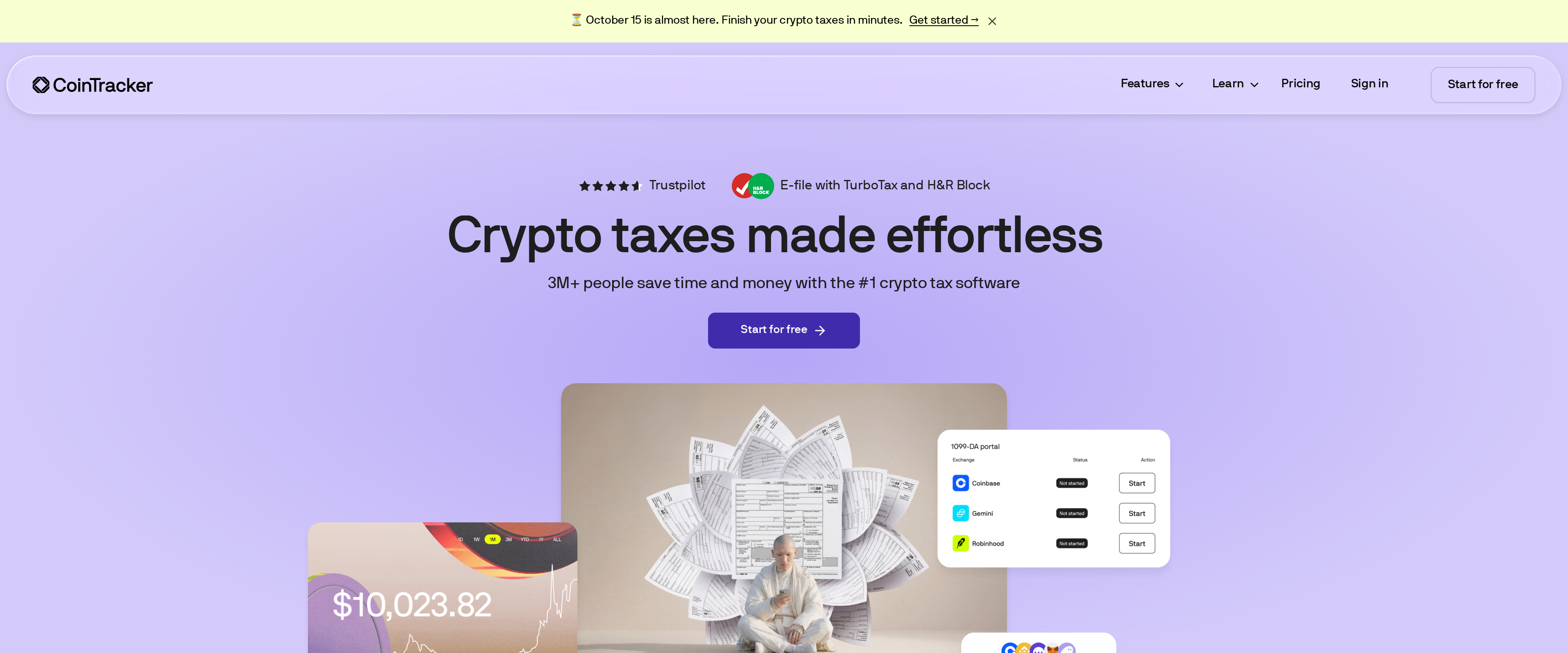
CoinTracker calls itself the number-one crypto tax software, and it is at least the biggest one built around a single relationship: Coinbase's official tax partner status. We connected a Coinbase account, added a DeFi wallet with cross-chain activity, and ran both through the paid tiers to see where that partnership actually pays off and where it does not.
The Coinbase sync is genuinely the best in the category
Connecting Coinbase took one click: approve read access through OAuth, and transactions started pulling in immediately, with cost basis attached correctly on every trade we checked. That is not a small thing. Several competitors ask for API keys pasted manually or a CSV export, and either path introduces a chance to fumble a step.
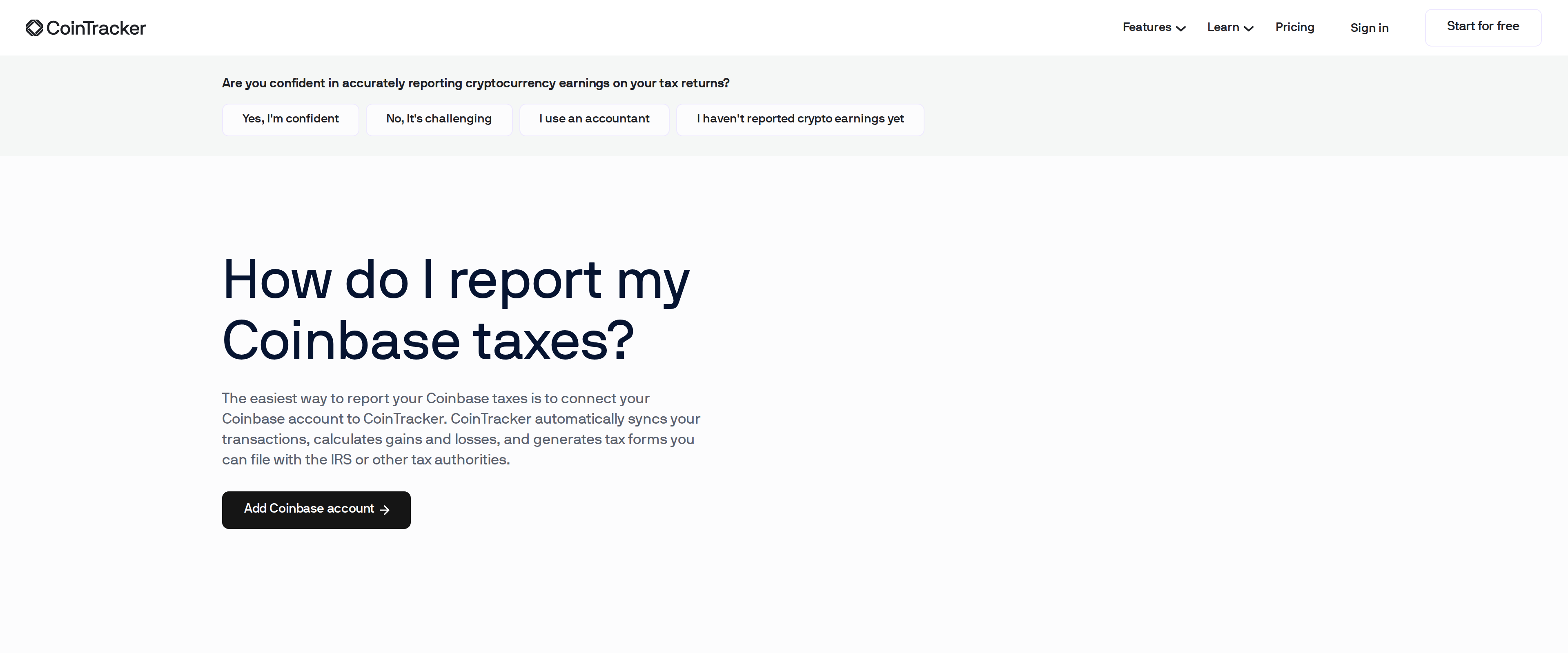
Independent CPA testing puts CoinTracker's accuracy on straightforward buy, sell and hold activity at 90 to 95 percent, which matched what we saw on the Coinbase-only side of our test account. For a reader whose entire crypto history sits on one or two centralized exchanges, this is close to a solved problem.
Where the accuracy claim breaks down
The moment DeFi, NFTs or cross-chain transfers enter the picture, the numbers get worse. Independent testing places accuracy on that activity at 80 to 85 percent, and our own DeFi wallet needed several manual corrections before the report looked right. Liquidity pool deposits can be logged as a disposal event, creating a duplicate taxable gain that was never actually realized, and cross-chain bridge transfers frequently failed to match automatically on our test wallet, landing as unlabeled transactions instead.